

Selling a Car After an Accident in Ohio or Michigan
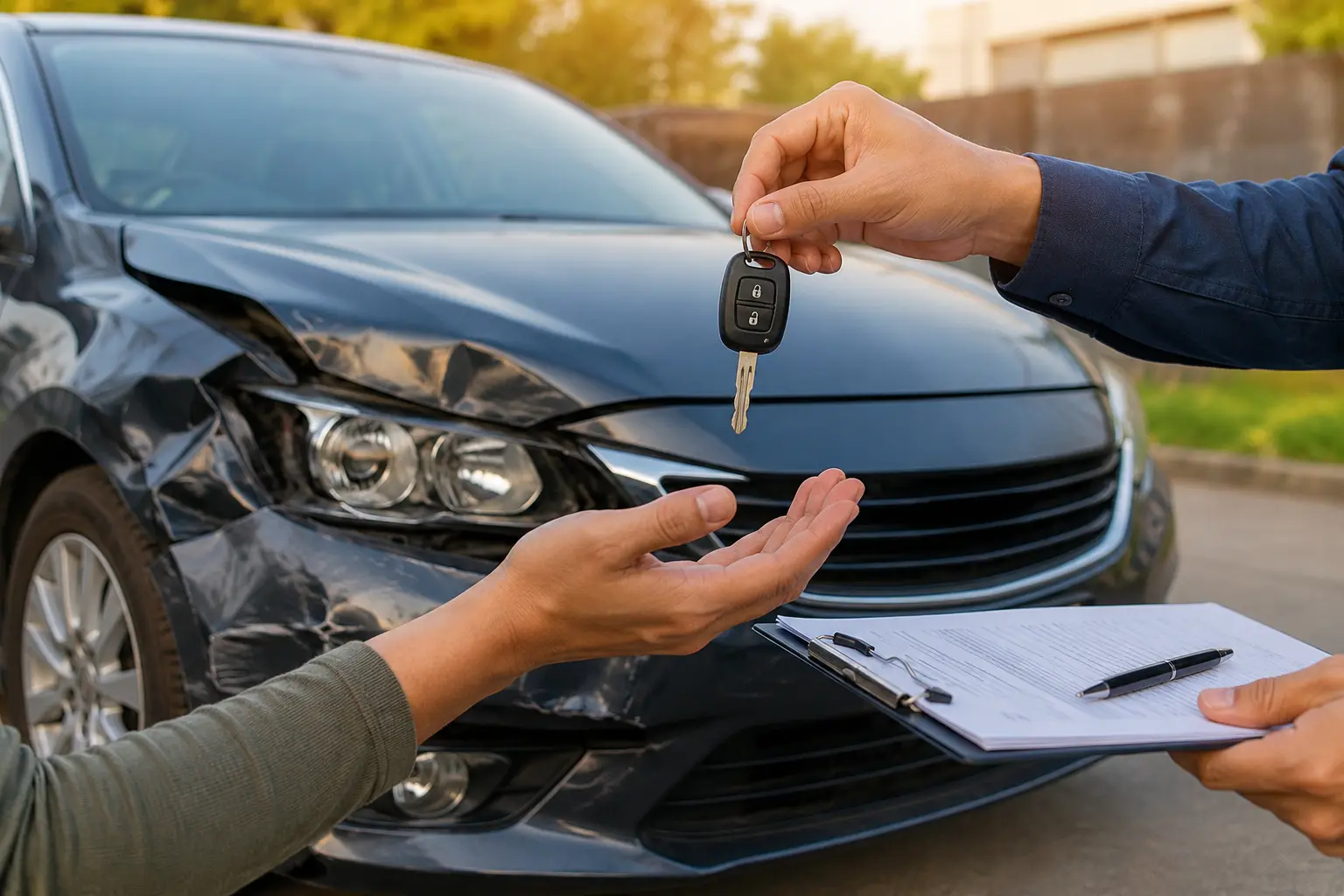
Most sellers guess their car lost a few hundred dollars in value after a fender-bender. In reality, guessing wrong on title status can cost weeks of delay, a collapsed private sale, or a rebuilt-salvage vehicle with no legal buyer. Selling a car after an accident in Ohio or Michigan hinges on paperwork most sellers never check until it’s too late.
Core Insights
- A clean title with disclosed accident history and a branded salvage title are two different sales with different rules
- Michigan brands a salvage certificate near 75-90% of value and a scrap certificate at 91%+
- Ohio brands a title the moment an insurer declares a total loss, before any repair happens
- You can often sell as-is without repairing, if you disclose the title status correctly
- Local, in-person buyers can confirm title status and repair quality faster than an algorithm can
What Your Title Status Actually Determines
A clean title with a disclosed accident is not the same transaction as a branded salvage title, even if the car looks identical in the driveway. The first is a negotiation over price. The second is a legal restriction on who can buy the car and how it can be used.
Ohio’s rule is simple to state and easy to miss. Once an insurer declares a total loss, the title gets branded salvage automatically. The car cannot be legally re-registered until it passes a state salvage inspection and earns a rebuilt salvage title. Driving it on public roads before that inspection can mean fines.
Michigan draws the line by percentage of value instead. An insurer must apply for a salvage certificate once repair costs hit roughly 75-90% of the vehicle’s actual cash value, and a scrap certificate kicks in at 91% or higher. A scrap-branded car generally cannot go back on the road at all.
Here’s where most private sales fall apart. The seller lists the car as “clean title, minor accident” without realizing the insurer already filed for salvage branding. The buyer runs a VIN check, finds the mismatch, and walks. Confirming your actual title status before you list the car is the single highest-leverage step in this whole process.
Selling a Car After an Accident Without Fixing It First
Repair spending only pays off below the salvage threshold. If your damage estimate sits comfortably under Michigan’s 75% mark or Ohio’s total-loss trigger, putting money into bodywork can recover more value than it costs. Above that line, you’re funding a rebuilt title that many buyers will discount regardless of repair quality, the same way a fresh coat of paint won’t fool a mechanic checking the frame rails.
Diminished Value Claims Are Underused
Many Ohio and Michigan sellers don’t realize they can file a diminished value claim against the at-fault driver’s insurer, separate from the repair claim itself. This compensates for the resale value lost simply because the accident now shows on a Carfax or AutoCheck report, according to Conduit Law and Settlement Insight resources on diminished value.
Selling as-is is often the smarter move once you’re near or past the salvage threshold. A few practical notes:
- A direct, in-person buyer inspects the frame, welds, and repair quality firsthand, whether it’s a sedan or part of a Truck and SUV Purchasing or Van Purchasing appraisal.
- An online-only quote is built off photos and a VIN report, with no way to confirm repair quality.
- An Online Vehicle Valuation from Sell with Reineke gives you a starting number before an in-person inspection confirms it, with no obligation to sell.
Why Local Buyers Beat National Offers on Damaged Vehicles
National cash-for-cars platforms price accident history algorithmically. The system reads a VIN report, sees a salvage or rebuilt brand, and applies a discount formula regardless of how the repair was actually done. A rebuilt vehicle repaired to OEM or I-CAR standards often still gets penalized the same as one patched together cheaply, because the algorithm can’t see the weld quality.
A local buyer can. Physical inspection catches the difference between a frame straightened by a certified shop and one that was hidden under fresh paint. That distinction alone can swing an offer by thousands of dollars.
Paperwork Logistics Differ by State
Title transfer for a branded vehicle isn’t a one-click process.
- Ohio requires a BMV salvage inspection before a rebuilt title can transfer.
- Michigan requires the Secretary of State to process a branded title transfer, and the buyer needs to see that brand before the sale closes.
- Both states expect accurate disclosure at the point of sale, not after.
A local, in-person purchase across Fostoria, Findlay, Tiffin, Lima, North Baltimore, or Southgate can walk through that paperwork the same day, instead of mailing documents back and forth with a call center. That’s the practical edge behind Sell with Reineke’s model: local, in-person vehicle purchasing across 6 locations in OH and MI, with no obligation to buy a car from them.
Pro Tip: Bring your insurer’s total-loss letter or repair invoice to the appraisal. It settles the title-status question before the inspection even starts.
Frequently Asked Questions
Can I sell a car with a salvage title in Ohio or Michigan?
Yes, but the buyer pool narrows significantly, and the title must be correctly branded before any transfer. Ohio requires a passed salvage inspection and rebuilt title first. Michigan requires the Secretary of State to process the brand.
Do I have to disclose a past accident if the title is clean?
Yes, both states require accurate disclosure, and most buyers now run a VIN history report before making an offer. TradePending’s 2025 Automotive Consumer Survey found 70.3% of shoppers rank accident reports as their top research priority.
Will insurance still cover a rebuilt salvage title car?
Coverage is often available, but many insurers limit it to liability-only or restricted comprehensive coverage. That restriction directly affects what a future buyer is willing to pay.
How much does an accident actually lower resale value?
It depends more on severity, repair quality, and title branding than the crash itself. Industry data, including the CARFAX 2026 Vehicle Impact Report, points to resale drops in the 10-30% range depending on those factors.
If you’re holding an accident-damaged car, truck, SUV, or van and want a number today instead of a week from now, Get Your Offer for a same-day, in-person evaluation with no obligation to sell.

Ready to sell your car?
8 places to bring a vehicle across 6 towns, or start it from your driveway with the plate and a few photos.
Would rather talk? 419-435-7741