

How to Sell Deceased Person Car in Ohio Legally
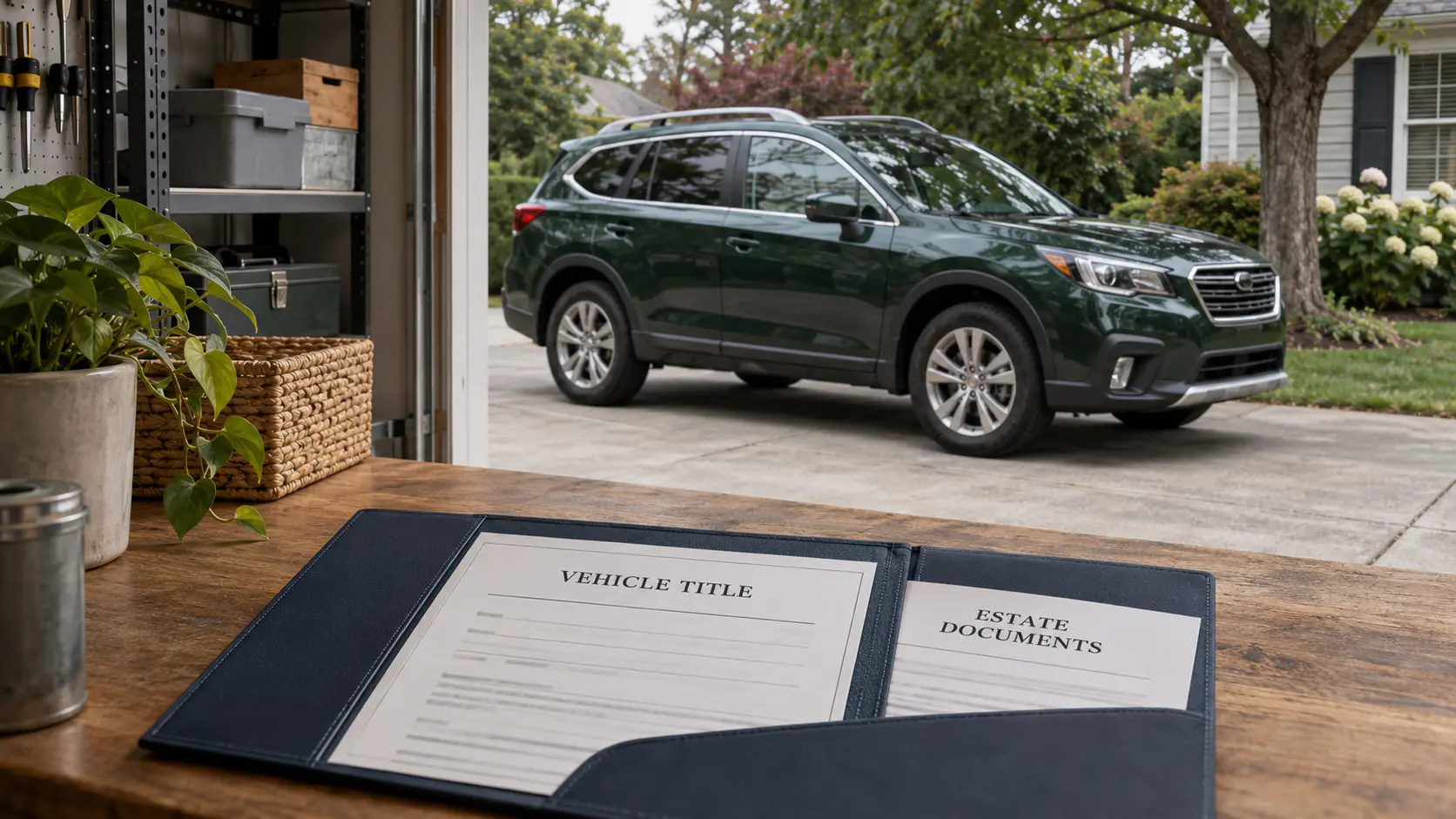
Most families assume the next of kin, or whoever holds the keys, can sign over a late relative’s car at the BMV. Ohio does not work that way.
Titles go through the county Clerk of Courts Title Office, where Swift Probate reports a fee of $18 or $23 per title depending on the county. The fee is the easy part. The hard part is proving who has legal authority to sign.
If you need to sell deceased person car in Ohio, read the title before you read the will. The title wording, or a court document, decides who can sell and which estate papers you need.
A buyer can value the car right away, but payment and transfer wait until that authority is on paper. Families in Fostoria, Findlay, Tiffin, Lima, and North Baltimore can get a valuation and a paperwork pre-check from Sell with Reineke while probate plays out.
Table of Contents
- Who Can Legally Sign the Title?
- Can You Sell Deceased Person Car in Ohio Before Retitling?
- A Loan Changes the Order of Steps
- Get an Offer Before the Paperwork Is Final
- Frequently Asked Questions
Who Can Legally Sign the Title?
Being a son, daughter, or sibling gives you no right to sell the car. Holding the keys gives you none either. Authority comes from the title wording or from a court document. Work through these checks in order and stop at the first one that applies:
- Transfer-on-Death beneficiary. Look at the front of the Ohio title. A sole owner may have named a beneficiary using Form BMV 3811. If so, that person can generally claim the car outside probate.
- Joint ownership with survivorship. Wording that grants right of survivorship passes the car to the surviving co-owner.
- Surviving-spouse affidavit. A spouse can use Form BMV 3773 to select one or more vehicles with a combined value of up to $65,000.
- Release from administration. For smaller estates, the probate court can issue a certified order that authorizes the transfer.
- Full probate. An executor or administrator with letters of authority signs for the estate.
Wills and spouse rights have limits
The spouse allowance is often misread. It does not mean every surviving spouse owns every vehicle. The $65,000 combined cap, the title wording, and whether the car was left to someone else all matter. Being named in a will also does not override a title that names a TOD beneficiary. Think of the title as the deed to a house, which generally controls over what a relative remembers being promised.
Every route ends at the county Clerk of Courts Title Office, not a BMV license counter. Call ahead about hours, accepted copies, and notary rules.
Can You Sell Deceased Person Car in Ohio Before Retitling?
Usually not. If the title still shows the deceased owner, the person with authority normally retitles first. The other option is to ask the county title office whether a direct assignment is acceptable.
TOD beneficiaries and surviving spouses typically retitle into their own names with Form BMV 3774, then sell as the owner. Executors and administrators can often sign for the estate directly, in the capacity their letters of authority allow. A release-from-administration order works the same way, since the certified order names who may transfer the vehicle. In each case, the signer’s role must match the paperwork exactly.
The signature that sinks a sale
Never sign the deceased owner’s name, and never backdate a title. A forged or backdated signature can void the transfer and freeze payment until the title is corrected. That correction can add weeks. Ohio Legal Help and the probate court can confirm who signs and in what capacity.
Documents by route
Every route needs the original title, a certified death certificate, and government-issued photo ID for the signer. The state’s Ohio BMV title documentation guidance is a useful reference before your appointment. Each route then adds its own papers:
- TOD beneficiary: the title showing the BMV 3811 designation, plus the title application.
- Surviving spouse: the completed BMV 3773 affidavit and proof of marriage if the office asks.
- Executor or administrator: letters of authority and any probate entry that authorizes the sale.
- Release from administration: the certified court order naming the person entitled to the car.
- Any route with a loan: the lender’s payoff letter and lien release details.
For more on estate titles and liens, our title, loans, and paperwork guides cover related situations.
A Loan Changes the Order of Steps
A lien survives the owner’s death. Inheritance and probate do not erase it, and the buyer cannot get a clean title until it is released. This workflow keeps the sale moving:
- Call the lender, report the death, and ask for the estate or title contact.
- Request a written payoff letter with a good-through date.
- Ask whether the lender holds the title electronically or on paper.
- Agree on how the lien release is sent, either before the sale or at closing.
In most sales, the buyer pays the lender directly from the purchase price, much like selling a financed car for a living owner. Any leftover equity goes to the estate or the authorized seller. If the payoff is more than the car is worth, someone must cover the gap before the lien is released. That is usually the estate, so talk to the executor or an attorney first.
Stored or non-running cars during probate
Probate can take months, and a parked car still costs money. Keep insurance active until the title transfers, because a lapse causes trouble if the car is damaged or moved. If the car sits in paid storage, ask whether the estate can move it somewhere cheaper. Don’t let a relative drive it while the estate is open, especially if it carries expired registration.
Pro Tip: Ask the lender for a payoff letter good for at least ten days. A letter that expires before your title appointment forces you to repeat that step.
Get an Offer Before the Paperwork Is Final
A valuation and a completed sale are two separate events. A family can learn the car’s worth through an Online Vehicle Valuation or a free car appraisal while probate is underway. Payment and title transfer happen only after authority is documented. Splitting the two means nobody waits months just to learn the value of an inherited vehicle.
What a local pre-check catches
Sell with Reineke offers local, in-person vehicle purchasing across 6 locations in OH and MI, with no obligation to buy a car from us. Bring the title, death certificate, and authority documents, and our staff review them before the appraisal. Problems surface early, such as a missing survivorship line or an expired payoff letter. When authority is unclear, we point you to the right county title office or probate professional.
The appointment follows a set order:
- Document review covering signer ID, death certificate, title or lien details, and court papers
- Vehicle inspection and lien check
- Offer acceptance and payoff coordination
- Payment, title assignment, and pickup
The process is the same for Direct Car Purchasing, Truck and SUV Purchasing, Van Purchasing, and Powersports Vehicle Purchasing. Bring two certified copies of the death certificate. Lenders and title clerks often each keep one.
National online buyers make fast, remote offers, and their own sites explain how those offers work. A remote process is built around standard ownership, though, and estate papers rarely fit a standard form.
Having someone read Ohio letters of authority or a BMV 3773 affidavit line by line, in person, saves rework. When you’re ready to sell deceased person car in Ohio, Get Your Offer at no cost and know the car’s value before probate closes.
Book the in-person sale once the paperwork route is confirmed, and bring disputed heirs, unclear wills, or creditor claims to the county probate court or an Ohio estate attorney first.
Frequently Asked Questions
Can I sell my deceased parent’s car in Ohio if the title is still in their name?
Only if you hold legal authority, such as TOD beneficiary status, letters of authority, or a court order. You will usually retitle first or confirm a direct assignment with the county title office. Never sign your parent’s name.
Can a surviving spouse sell the car without opening probate in Ohio?
Often, yes. A spouse can use Form BMV 3773 to select vehicles worth up to $65,000 combined, retitle them, and then sell. The title wording and any other disposition of the car still apply.
Do I have to retitle an inherited car before selling it in Ohio?
TOD beneficiaries and surviving spouses normally do. Executors and administrators can often sign for the estate under their letters of authority.
What if the deceased person still owed money on the vehicle?
The lien stays with the car. Get a payoff letter, and the buyer can pay the lender directly before sending any equity to the estate.
Can an executor sell the car directly to a dealership or vehicle-buying service?
Yes, with letters of authority and any probate entry that authorizes the sale. The buyer will also ask for the original title, a certified death certificate, and ID.

Ready to sell your car?
8 places to bring a vehicle across 6 towns, or start it from your driveway with the plate and a few photos.
Would rather talk? 419-435-7741