

Sell Car With Dead Battery: Replace, Diagnose or Sell As-Is?
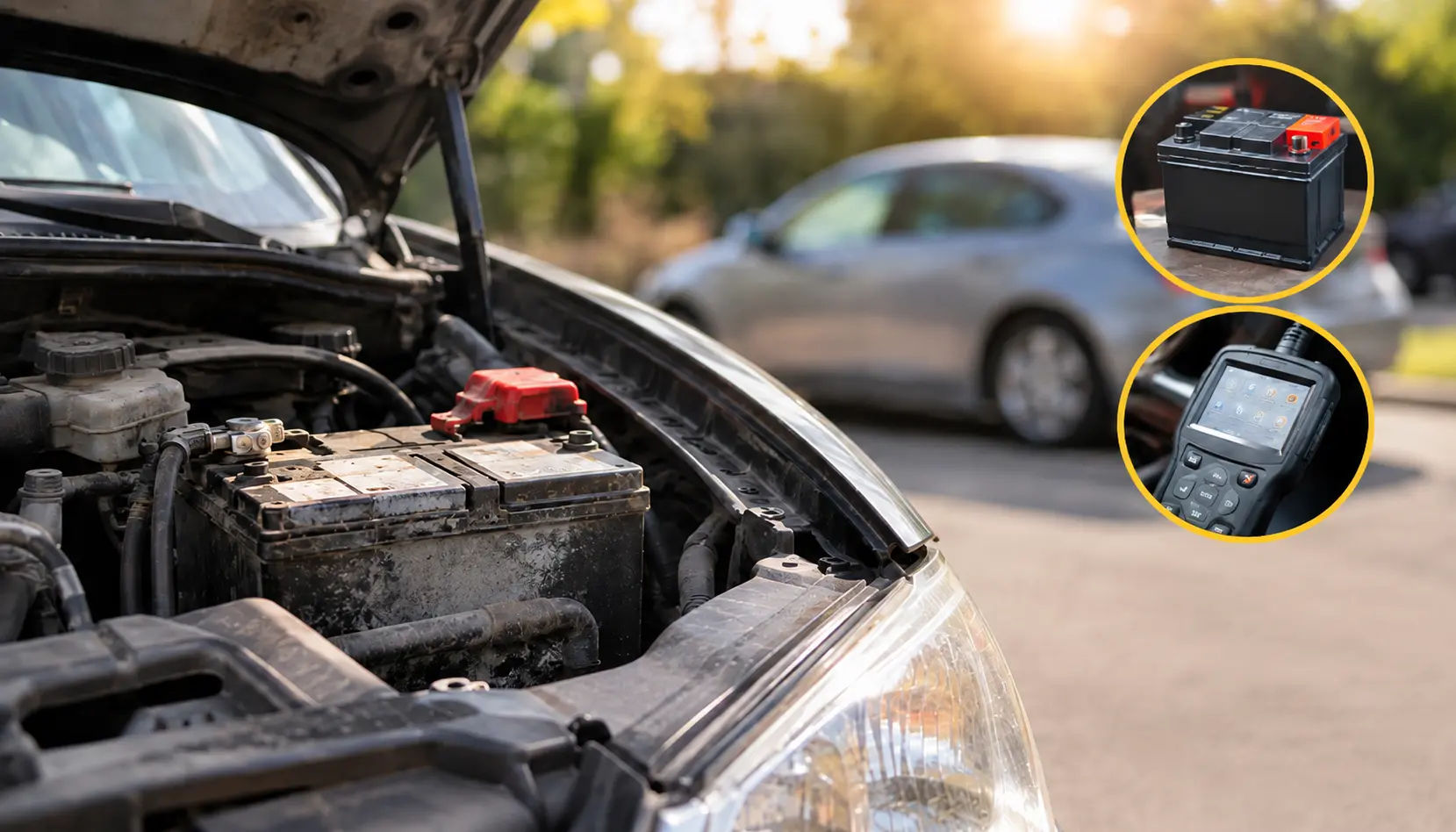
Most owners with a car that will not start assume the battery is the problem, buy a new one, and list the car as “just needs a battery.” A better first move is testing the starting and charging systems, so you can tell a discharged 12-volt battery from a bad alternator, starter, parasitic drain, or immobilizer fault before you spend money or make a claim to a buyer.
You can sell a car with a dead battery without replacing it, and the diagnosis, not the battery, should drive the decision.
Table of Contents
- Can You Sell a Car With a Dead Battery?
- Fix It First or Sell As-Is?
- Get a Dead Car Picked Up
- Paperwork for an As-Is Sale in Ohio and Michigan
- Frequently Asked Questions
Can You Sell a Car With a Dead Battery?
Yes. A car that will not start can be sold, and replacing the battery first is optional. What matters is knowing what you are actually selling, because “dead battery” is often a guess.
Run this diagnostic tree first
- Check dash and interior lights. Bright lights with no crank suggest a starter or immobilizer issue. Dim or dead lights point toward a discharged battery.
- Listen. Rapid clicking usually means low battery power. A single click or silence can mean a starter or connection fault.
- Inspect the battery case. Only if it looks normal, try a jump-start.
- Watch the car after the jump. If it starts and then dies again, suspect the alternator, not the battery.
- Note slow overnight drain. A battery that dies repeatedly after charging suggests a parasitic drain.
Do not advertise “just needs a battery” unless the charging and starting systems have been tested. A wrong claim can sour a dealer offer or a private-party sale once the buyer finds the real fault.
Know the safety stop signs
Do not jump-start or casually remove a battery that is swollen, cracked, leaking, hot, frozen, or smoking. A collision-damaged or flooded vehicle also needs a professional look first.
Pro Tip: An electric vehicle is a different case. A dead 12-volt accessory battery is not a damaged high-voltage traction battery, and a suspected traction-battery fault must be disclosed before anyone transports the vehicle.
Fix It First or Sell As-Is?
Think of it as a comparison in words. Take what the vehicle would realistically sell for running, then subtract the battery, diagnostic fee, installation, towing, and your time. Set the result against the best documented as-is offer. Whichever is higher wins.
Replacing the battery makes sense on a newer, low-mileage, otherwise sound vehicle where a test has confirmed the battery is the fault. It rarely makes sense on an older, high-mileage car, or one showing other problems such as warning lights, leaks, or body damage.
Our guide on whether to fix a car before selling reaches the same conclusion: repair when the car is otherwise sound, sell as-is when it is old or has additional defects.
Acting too early carries real risk. You can pay for a new battery and still have a no-start because the starter or alternator was the actual culprit. That leaves you with a repair bill and the same sale story you started with, like painting a wall before finding the leak behind it.
A workable rule of thumb:
- Get one as-is offer before spending anything.
- Run an Online Vehicle Valuation to see what a running version might fetch.
- Compare the two numbers, then decide.
A buyer who sees the car in person can often judge a no-start problem faster than an online form can. That is where a local appraisal narrows the gap between a guess and a real offer. Sell with Reineke handles this through Direct Car Purchasing, with no requirement to buy a vehicle from us.
Get a Dead Car Picked Up
Buyers will generally collect a non-running car from a garage, blocked driveway, or apartment lot, but they need accurate details first. Surprises at the door, such as a car that cannot be rolled onto a flatbed, are what usually change a quoted price.
Report these up front:
- Blocked access or a tight garage
- A narrow driveway
- Flat tires or missing wheels
- Locked steering
- A car that will not roll
- Missing keys
How the sale channels compare
Local in-person buyers can inspect the car where it sits, explain the offer face to face, and usually arrange pickup, which keeps price certainty high. National online offers are fast to request, but each carries its own terms.
CarMax, for example, publishes that its online offer is valid for seven days and does not require buying another vehicle, so read the conditions rather than assume every buyer treats a no-start the same way.
Private-party and marketplace sales can bring a higher price, but you handle towing questions, no-shows, and buyers who walk away after seeing the car. Salvage yards pay quickly but typically value the car as scrap.
Local, in-person purchasing across six Ohio and Michigan locations is what sets a regional buyer apart: Fostoria, Findlay, Tiffin, Lima, North Baltimore, and Southgate. Owners with something other than a sedan can use Truck and SUV Purchasing, Van Purchasing, or Powersports Vehicle Purchasing.
Paperwork for an As-Is Sale in Ohio and Michigan
State rules change the details here, so confirm each item with the buyer and the relevant agency before pickup. Check the Ohio BMV and the Michigan Secretary of State for current forms and fees.
Both states, bring or confirm:
- Title, or lien payoff details if a lender holds it
- Odometer reading
- Photo ID
- Registration and plates
- Agreed payment method
Ohio: Complete the title assignment with the buyer and confirm how plates should be handled before the car leaves.
Michigan: The Michigan State Police notes that a buyer in a private-party purchase has 15 days to transfer the title, so file your release of liability promptly so the sale is documented on your end.
If you are missing keys, registration, or a clear title, the sale is usually still possible but slower or lower. Our posts on selling with a missing title in Michigan and selling with expired registration cover those cases in detail.
Disclose what you know, and only that
Describe the symptoms (no start, clicking, no dash lights) and any tests you ran. Avoid guessing at a cause, and keep a short written record. This protects both you and the buyer, and it keeps an honest as-is sale from turning into a dispute.
When you are ready, Get Your Offer for a no-obligation, as-is local appraisal from Sell with Reineke. No vehicle purchase is required, and we buy cars, trucks, SUVs, vans, and powersports vehicles in Ohio and Michigan, so you can sell a car with a dead battery without spending a dollar on repairs first.
Frequently Asked Questions
Can I sell a car that won’t start?
Yes. Many buyers accept non-running vehicles, provided you disclose the condition honestly and report pickup details such as whether the car rolls. Final offers depend on condition, title status, and location.
Should I replace the battery before selling?
Only if the car is newer, otherwise sound, and a test has confirmed the battery is the fault. For older or high-mileage vehicles, selling as-is often costs less than the repair.
Will a buyer pick up a car from my garage or driveway?
Often yes, but tell them about blocked access, flat tires, locked steering, or missing keys beforehand. Accurate details keep the quoted price from changing at pickup.
Is a dead EV battery the same as a dead car battery?
No. A dead 12-volt accessory battery is a minor issue, but suspected high-voltage traction-battery damage must be disclosed before transport because it changes who can safely move and buy the vehicle.
Can I sell without keys or a clear title?
Sometimes, but each missing item can lower the offer or slow the process. Confirm requirements with the buyer and your state agency before scheduling pickup.

Ready to sell your car?
8 places to bring a vehicle across 6 towns, or start it from your driveway with the plate and a few photos.
Would rather talk? 419-435-7741