

How to Sell a Car with a Bad Transmission Without Repairing It
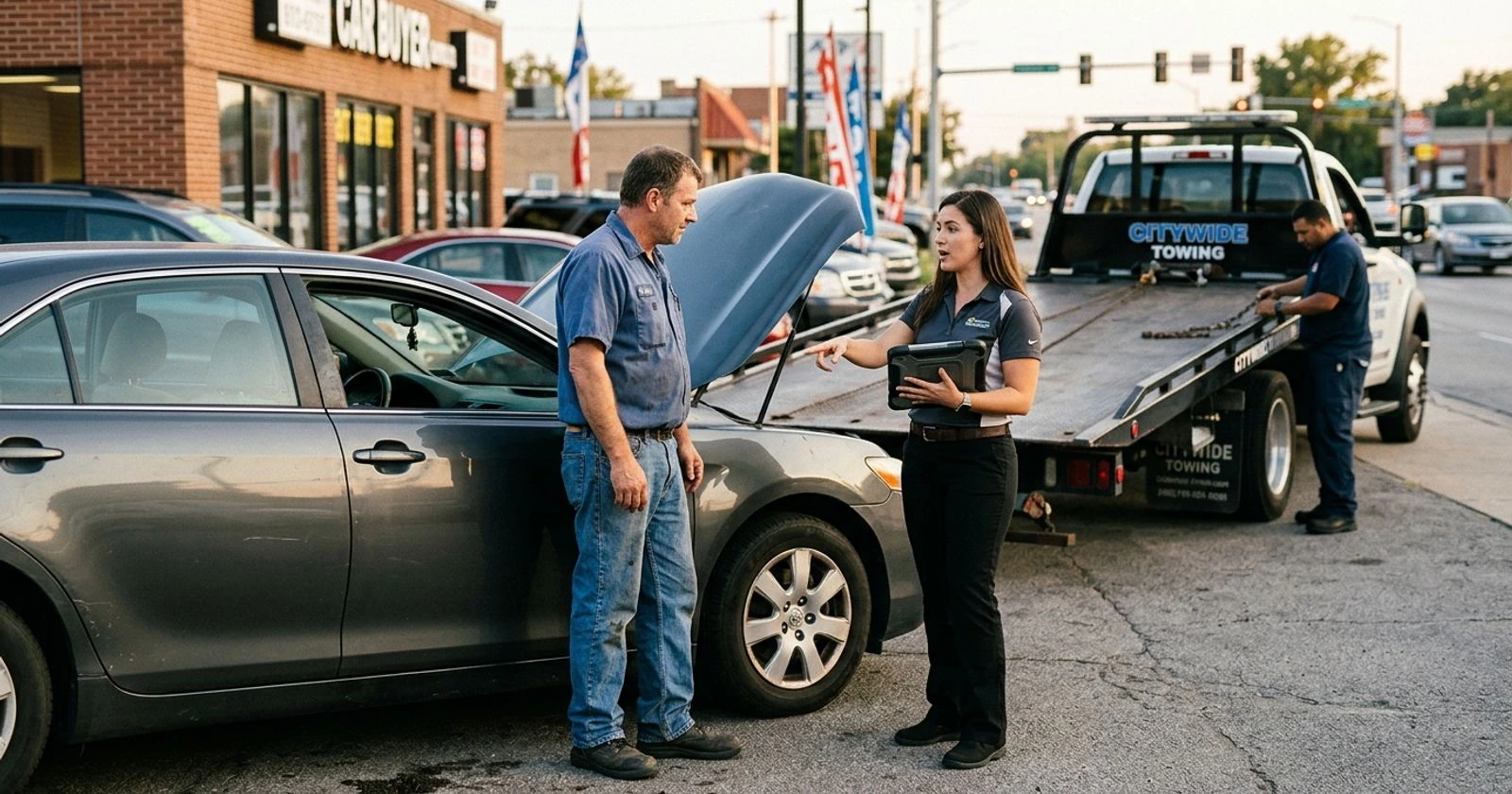
Owners who sell a car with a bad transmission will increasingly be asked for a written diagnosis before anyone makes a real offer, because buyers are tired of pricing every non-shifting vehicle as scrap. That means the owners who do a little homework first will get stronger offers than the ones who panic and accept the first quote.
Yes, you can sell a car with a bad transmission, and it does not automatically become scrap. The right move is to confirm what actually failed, compare the repair bill against the as-is offers you can get today, and then decide. Most owners skip the first step and overpay for it later.
Table of Contents
- Is It Really a Failed Transmission?
- Repair It or Sell As-Is?
- Stop Assuming a Dead Transmission Means Scrap
- Paperwork and Disclosure in Ohio and Michigan
- Frequently Asked Questions
Is It Really a Failed Transmission?
Stop treating “bad transmission” as one diagnosis. A fluid leak, worn solenoid, faulty sensor, valve body fault, torque converter shudder, worn clutch on a manual, or CVT fault code can each cause the same symptoms you feel from the driver’s seat. Complete internal failure is only one of them, and the repair economics differ enormously.
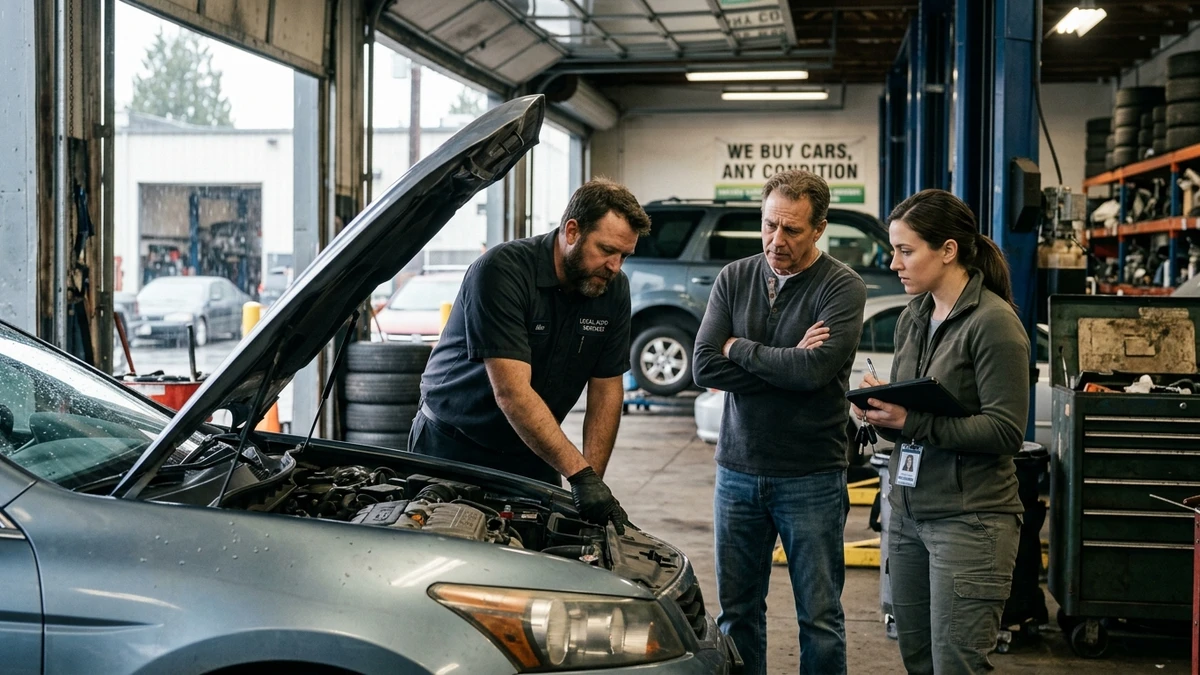
Kelley Blue Book’s transmission repair guidance lists difficulty shifting, grinding, and inability to shift as common warning signs, and notes that cost varies by vehicle, transmission type, shop, and location. Those same symptoms can point to a modest repair or a full replacement. Nobody can tell which from your description alone.
Think of it like a check-engine light in January. It could be a loose gas cap or a failing catalytic converter, and guessing wrong costs real money. Before you ask anyone for an offer, fill out this intake checklist:
- Does it slip between gears or hesitate before engaging?
- Does it grind or clunk when shifting?
- Is there a fluid leak under the vehicle?
- Does reverse work? Does any gear work?
- Will the vehicle move at all?
- Are any warning lights on?
- Does the engine start and run normally?
That last question matters most. A car that starts but will not shift is priced very differently from one with a dead engine, and buyers want to know which one they are looking at.
A written shop diagnosis does two jobs. It supports an honest disclosure, and it tells you whether you face a few hundred dollars or several thousand. Published national benchmarks show how wide the spread runs: Kelley Blue Book shows a replacement range of $2,900 to $7,100, while RepairPal’s displayed national range is $6,238 to $6,764. Treat both as national benchmarks, not Ohio or Michigan quotes.
Repair It or Sell As-Is?
Compare three things in plain terms. First, what the vehicle would realistically sell for if it ran well. Second, the full written repair estimate, including diagnosis, towing, taxes, warranty terms, and any related work the shop finds. Third, the as-is offers you can get this week.
Take the repaired value, subtract the full repair cost, then subtract the weeks of downtime and the risk of a second failure. If what is left falls below the best as-is offer, selling without repairing is usually the safer move.
You will hear the rule that you should repair only when the bill is under half the car’s value. Use it as a quick screen, not a law. Age, rust, mileage, engine health, title status, trim, and local demand can all override it.
Four owners, one repair bill
The same estimate leads to different decisions depending on the vehicle:
- Older high-mileage sedan. The body may be worth less than the repair. Selling as-is almost always wins.
- Late-model SUV with a clean title. This is the strongest repair candidate, but only if the diagnosis is confirmed and the written estimate is reasonable.
- Pickup truck. Demand stays steady, so price out the repair, then compare it against an offer that credits the engine and body.
- Cargo van. A work van that earns money while running can justify a repair. One that already sits idle usually cannot.
Should you replace the transmission before selling an older vehicle? Rarely. A repair seldom returns its full cost at resale, because buyers discount for the vehicle’s history and the unknown quality of the installed unit.
Pro Tip: Get the repair estimate in writing even if you plan to sell as-is. It is your proof of what you disclosed and your yardstick for judging every offer.
Stop Assuming a Dead Transmission Means Scrap
A buyer looking at a non-shifting vehicle is valuing everything else: engine condition, catalytic converter, body panels, wheels and tires, interior and trim, and electronics. A strong engine and clean body can lift an offer well above scrap value. Heavy rust or collision damage pulls it back down. If the problem started with a crash, our guide to how owners sell a damaged car covers how that changes the picture.
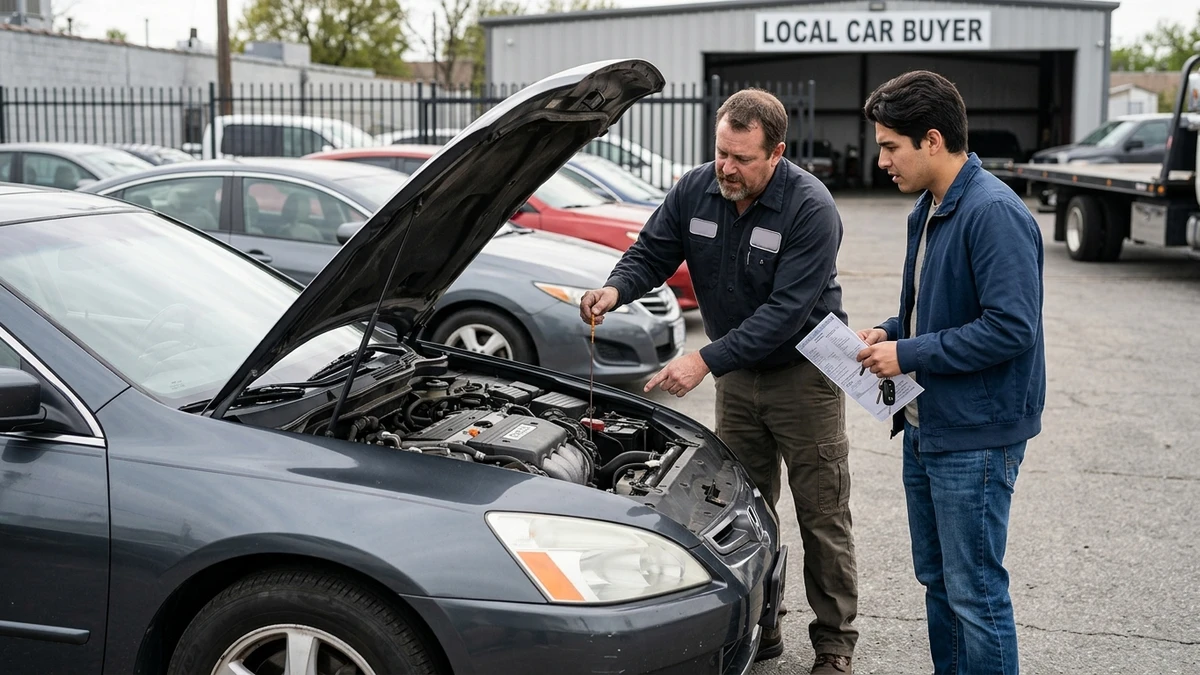
The non-running pickup checklist
Answer these before the appraisal visit, and report them honestly:
- Does it start?
- Does it roll, steer, and brake?
- Will it engage any gear?
- Is it parked where a flatbed can reach it?
- Will it need a winch or a dolly?
Each answer changes how hard and how safe the tow is. Accurate answers also prevent a quote that falls apart at pickup.
Choosing a sale route
Each route trades price against time, safety, and who pays for towing:
- Direct purchase. Usually the fastest. Towing is often handled by the buyer, and the offer can credit parts that still have value.
- Dealer trade-in. Convenient, but a non-shifting vehicle often gets a conservative number. Our comparison of trade in vs selling cash shows where each makes sense.
- Private sale. Can bring the highest ask, but expect strangers in your driveway, test-drive limits on a car that will not shift, and weeks of waiting.
- Transmission shop sale. Some shops buy vehicles for their own repair work, but they price in their own labor.
- Recycler or scrap yard. Quick and certain, but priced by weight and parts.
National instant-offer sites and many junkyards price from a script. An in-person appraisal can credit what is still good on the vehicle. Sell with Reineke buys vehicles through local, in-person appraisals at 6 locations across Ohio and Michigan, with no obligation to buy a car from us. Our Online Vehicle Valuation, Truck and SUV Purchasing, and Van Purchasing cover the vehicle types in the scenarios above.
Paperwork and Disclosure in Ohio and Michigan
Do you have to disclose a slipping transmission in a private sale? Written, specific disclosure is the safest practice in both states. Dealers must display an FTC Buyers Guide under the Used Car Rule, but that rule is not a blanket requirement for private sellers.
An as-is clause does not automatically protect someone who conceals a known defect, so consult official state guidance for anything beyond the basics. Michigan’s traffic laws FAQ is a reasonable starting point there.
Plain wording for a bill of sale: “Sold as-is. Transmission does not shift reliably. No warranty expressed or implied.” Add the VIN, mileage, price, date, and both signatures, and keep copies.
The handoff checklist
- Title. Sign it over exactly as the state requires. Ohio runs its own title process through the Ohio BMV, while Michigan’s Secretary of State sets a 15-day window for the private-party purchaser to transfer the title. If yours has gone missing, see how to handle a missing title in Michigan.
- Lien payoff. Get a payoff letter from your lender before the sale.
- Odometer. Record the mileage on the title or disclosure form.
- Bill of sale. Keep a signed copy.
- Plates. Check your state’s rules on removing them.
- Responsibility. Know what ends your liability, and cancel coverage afterward.
Can you sell if you still owe on the loan? Yes. The lender holds the title until the balance is paid, so the payoff letter drives the deal, and our walkthrough on selling a financed car covers the steps. A buyer who completes the payoff and title paperwork in person removes most of the risk of selling a car nobody can test-drive.
A decision path for owners near Fostoria, Findlay, Tiffin, Lima, North Baltimore, and Southgate
- Get a written diagnosis.
- Gather the title or payoff letter.
- Photograph the vehicle and describe the symptoms using the intake checklist.
- Request a valuation.
- Arrange pickup.
That order protects you from spending money on a repair that an offer would have made unnecessary. When you are ready to sell a car with a bad transmission, Get Your Offer and compare a no-obligation local number against any repair estimate before you pay a shop.
Frequently Asked Questions
Can I sell my car if the transmission is completely blown and it will not move?
Yes. Tell the buyer it will not move so they can plan a flatbed or winch, and note whether it rolls, steers, and brakes. The engine, body, and other components still carry value.
How much is a car worth if it starts but will not shift into gear?
It depends on the vehicle’s age, engine health, body condition, title status, and local demand, so no single figure fits every car. A running engine and clean body generally support a stronger offer than scrap value. A written diagnosis and honest symptom report help buyers price it accurately.
Do I have to tell a buyer about a slipping transmission in Ohio or Michigan?
Honest, written disclosure is the safest practice in a private sale in both states. Dealers must display an FTC Buyers Guide, but private sellers should not rely on an as-is clause to cover a known, concealed defect. Check the Ohio BMV or Michigan Secretary of State for current guidance.
Can I sell a car with a bad transmission if I still owe money on it?
Yes. Request a payoff letter from your lender, since the lender holds the title until the balance is paid. A buyer who handles the payoff and title paperwork in person makes the process far simpler.
Does a bad transmission make my vehicle worth only scrap value?
No. A newer truck, popular SUV, or clean van with a strong engine can be worth well above scrap. Severe rust, a missing title, an unreleased lien, or major collision damage are what push a value down.

Ready to sell your car?
8 places to bring a vehicle across 6 towns, or start it from your driveway with the plate and a few photos.
Would rather talk? 419-435-7741