

Selling a Modified Car or Truck to a Local Buyer
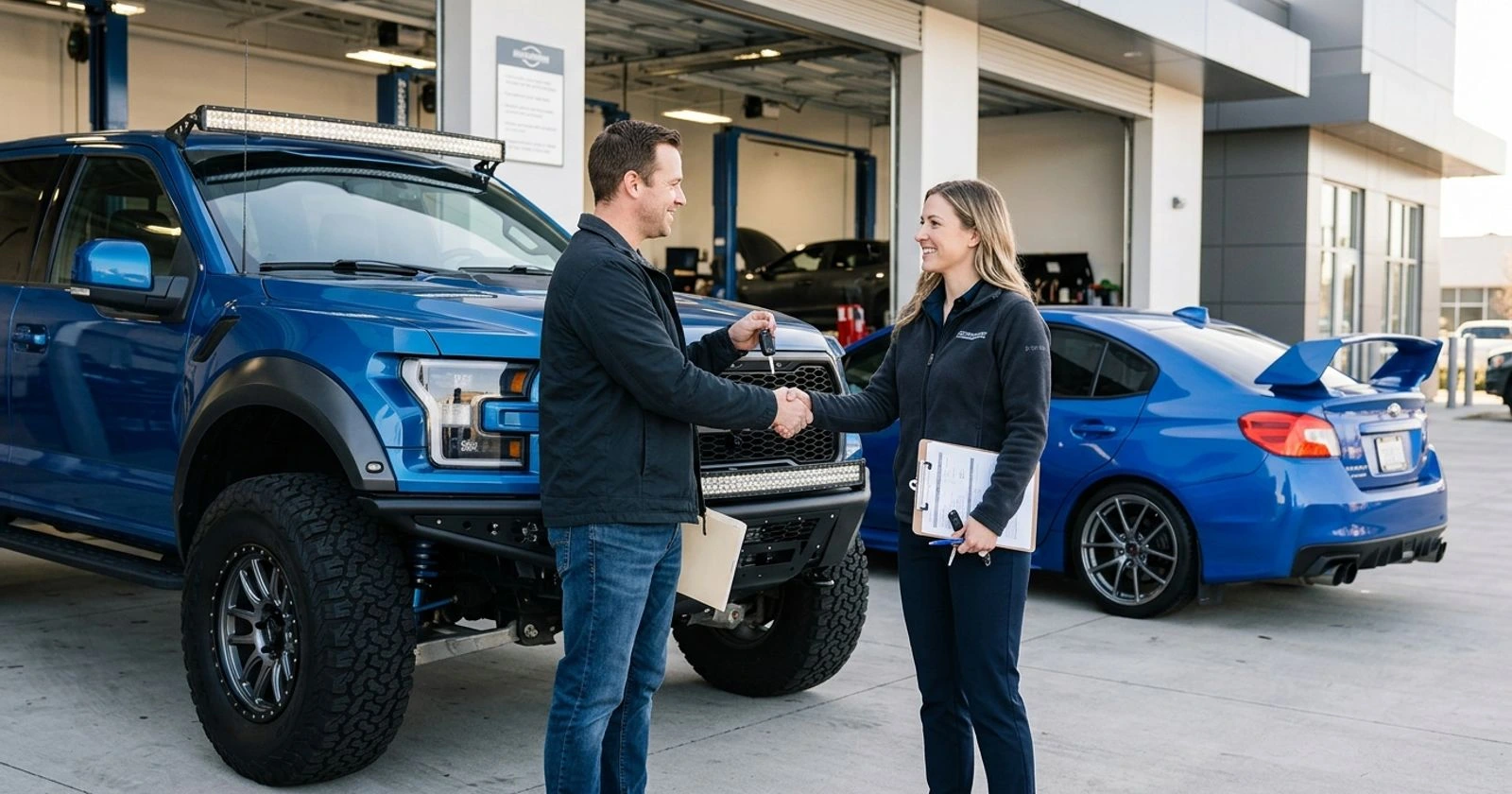
Most buyers do not pay you back for your build, and the receipts are the reason people think they will.
A $6,000 stack of invoices shows what you spent, but a buyer prices the vehicle they can verify, and for most modified cars and trucks that starts with the stock version.
Selling a modified car or truck goes best when you pick the right route first, then hand the buyer a clean packet so the build reads as an asset instead of a question mark.
What You’ll Need Before You Ask for an Offer
- Title status and any lien payoff or release information
- Current odometer reading, VIN, and all keys
- A one-page parts list with installer, dates, and mileage at installation
- Receipts, dyno sheets, tune details, and maintenance records
- Any original parts you still own, plus clear photos of the vehicle and major work
Table of Contents
- Which Mods Help, Hurt, or Do Nothing?
- Why Online Valuations Miss Your Build
- Build a Packet Before Anyone Quotes
- Where Michigan and Ohio Rules Change Selling a Modified Car or Truck
- Frequently Asked Questions
Which Mods Help, Hurt, or Do Nothing?
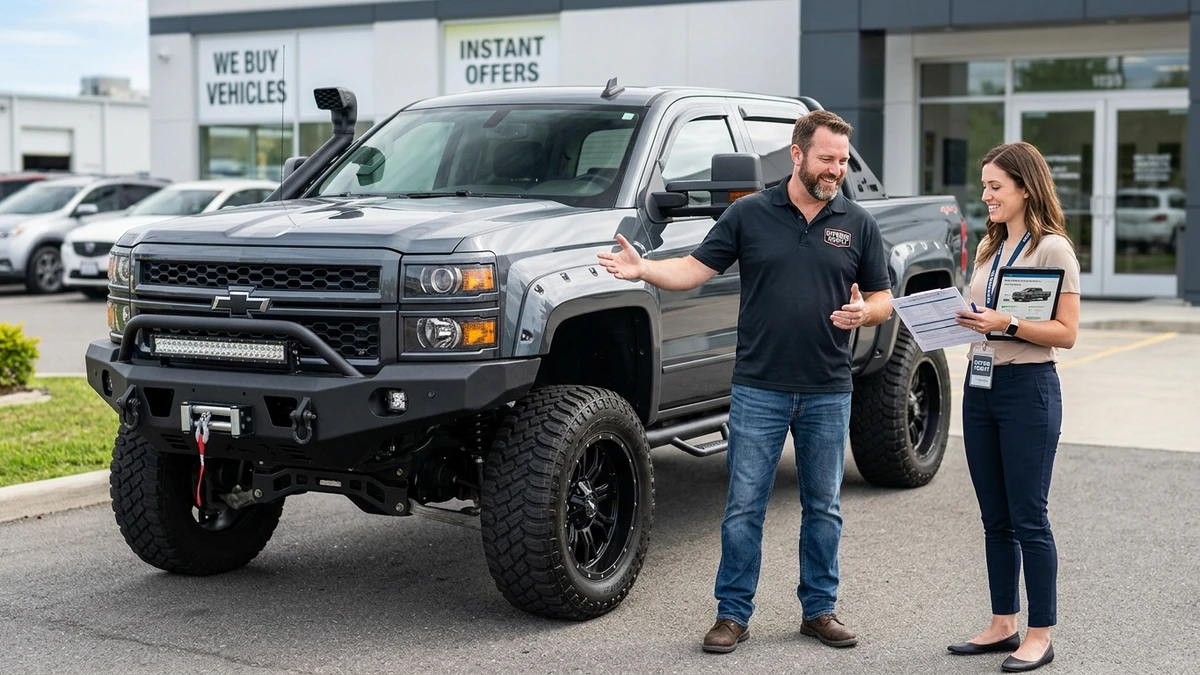
Treat each modification as its own category, because buyers do. Quality, reversibility, legality, and documentation decide whether an aftermarket part helps, does nothing, or earns a discount. Brand matters far less than finish.
Fitment and wear items. Lifts and oversized tires change alignment, speedometer accuracy, and load on steering and driveline parts. A professional suspension kit with an alignment sheet reads well. Cut springs and extreme lifts shrink the buyer pool. Wheel-and-tire packages depend on whether the factory wheels still exist.
Performance and engine work.
- Bolt-on exhausts and tunes narrow the buyer pool and raise emissions and reliability questions.
- Engine swaps without matching documentation are the hardest to price.
- A tune file and dyno sheet turn a rumor into a record.
Looks and utility.
- Quality bed protection, corrosion prevention, and clean accessories tend to be neutral or mildly positive.
- Lighting and body kits succeed or fail on legality and finish quality, not on brand.
- Powersports follow the same logic. Aftermarket exhausts, lift kits, and tire upgrades on ATVs, UTVs, and motorcycles help only when the work is clean and documented.
Receipts prove spending, not value. A seller sees $6,000 invested. A buyer sees a vehicle whose worth depends on whether the next owner wants that exact build and can trust the work.
Why Online Valuations Miss Your Build
A standard online vehicle valuation works from VIN, mileage, trim, options, and condition. That produces a stock baseline, which is useful, but it is not a price for your build. The Online Vehicle Valuation from Sell with Reineke works the same way, and it is the right first step for exactly that reason.
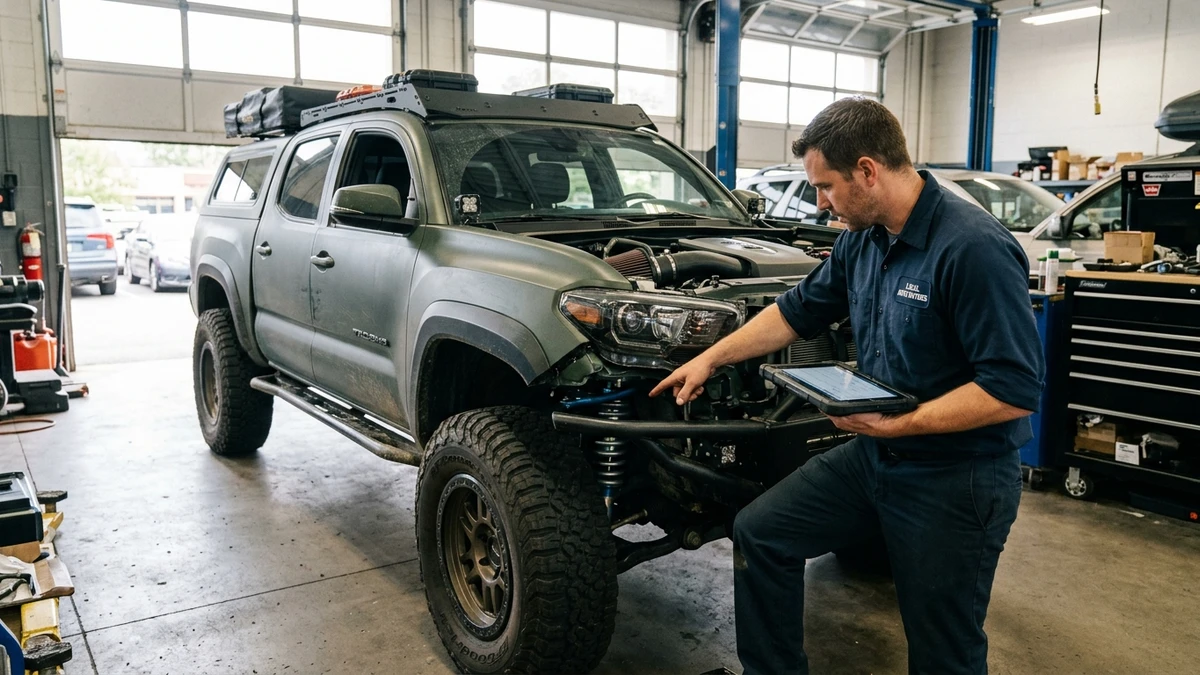
A form cannot see fabrication quality, custom paint, engine swap workmanship, dyno results, undocumented wiring, or tune files. Kelley Blue Book says its online values update weekly, which means they track market movement, not your parts list. Instant offers also expire quickly. CarMax, for example, states that its online offer is valid for seven days.
The risk sits in the gap between the condition you described online and what a buyer finds in person. That gap is where re-priced offers happen. If you checked “no modifications” or described a build loosely, expect the number to move at inspection.
Pro Tip: Run the online valuation first to anchor the stock number, then have the vehicle seen in person for the part the form cannot price. A local evaluation through Direct Car Purchasing or Truck and SUV Purchasing lets an appraiser look at the work itself.
Build a Packet Before Anyone Quotes
I would not let a buyer see a modified vehicle until the paperwork was ready. A one-page packet saves time and protects your price, and you can print it at home.
Vehicle record
- VIN and title status
- Lien or payoff information
- Odometer reading
- Emissions status
- Keys
Build record
- Complete parts list with brands and part numbers
- Installer and mileage at installation
- Tune and fuel details
- Receipts, dyno sheets, and maintenance records
- Photos of the vehicle and major work
Should You Return It to Stock?
Compare three things: the cost and time to remove the part, the risk of damaging anything, and the difference between what a buyer pays for the build and what they pay stock. Our post on whether to fix a car before selling uses the same logic. Undo only items that are reversible, cheap, and high-friction, such as a bolt-on exhaust. Leave engine swaps and custom paint alone.
If factory wheels, exhaust, or suspension parts still exist, bring them or list them. If they are gone, say so up front. A missing original part is a pricing factor, not a disqualifier.
Disclosure in Plain Terms
State the swap, the tune, deleted equipment, and any non-factory parts accurately. Describe what you know, not what you assume. Title basics can change what you hand over, so see our posts on a missing title in Michigan and on how to sell a car with a rebuilt title instead of guessing.
Where Michigan and Ohio Rules Change Selling a Modified Car or Truck
Michigan is where exhaust choices can become a sale problem. The Michigan State Police traffic-law FAQ says state law regulates exhaust noise, requires a muffler, and requires a resonator and tailpipe when the vehicle was originally equipped with them. A loud or incomplete exhaust can stall a deal even when the buyer loves the build. The same FAQ says a private-party purchaser has 15 days to transfer the title.
Ohio emissions rules matter only for particular vehicles, so check with the Ohio Bureau of Motor Vehicles if yours is affected. Equipment rules for lift height, lighting, and tint vary, so confirm them with the Michigan Secretary of State, the Ohio BMV, or your local agency before listing. Do not guess at numbers.
Four Routes, Matched to Your Priority
- Private sale has the highest ceiling and is the slowest. You field every buyer question and every scam attempt.
- Enthusiast auction suits rare builds, but fees and reserve risk apply.
- Online instant offer is fast, but it is built around stock descriptions, so expect adjustments.
- Local in-person purchase gives you certainty and same-day payment, with no obligation.
A trade-in appraisal ties your number to a vehicle you are buying from that dealer, and our comparison of trade in vs selling cash shows how that changes the result.
Sell with Reineke buys locally and in person across 6 locations in Ohio and Michigan, with no obligation to buy a car from them, so the offer reflects your vehicle alone. That holds for cars, trucks, SUVs, vans, and powersports.
If certainty and speed matter most when selling a modified car or truck, Get Your Offer and bring your packet to a local evaluation so the build gets seen, not guessed at.
Frequently Asked Questions
Will a dealership buy my car if it has an aftermarket exhaust or tune?
Often yes, but it affects the offer and the buyer’s risk assessment. A documented tune file and the original parts help.
Should I remove my lift kit, wheels, or performance parts before selling my truck?
Decide by cost and reversibility, not blanket advice. Undo cheap, easily reversed items. Leave major work in place.
Do I need to disclose an engine swap or ECU tune to the buyer?
Yes. Disclose accurately and in writing what you know. For legal questions, check with the state agency.
Can I sell a modified vehicle if I no longer have the original parts?
Yes, with an adjusted price expectation. Say so up front.
Will a modified car fail an appraisal because it has non-factory equipment?
Appraisal is not pass or fail. Non-factory equipment changes the number, and poor-quality work can lower it more than the mods themselves.

Ready to sell your car?
8 places to bring a vehicle across 6 towns, or start it from your driveway with the plate and a few photos.
Would rather talk? 419-435-7741